For my first blog, we’re digging into the National Archives.
Every year, the National Archives released a cache of Cabinet Office papers under the 20-year rule.
These disclosures often provide rather entertaining anecdotes from previous governments, such as Alastair Campbell’s brave idea to host a Rangers Celtic Derby in Belfast during the peace process.
I attempted to pop down to the archive at Kew last year, after a little bird told me included in the documents there was some material on the implementation of the freedom of information act. As an FOIA nerd of my calibre, I couldn’t resist.
Sadly, it emerged when I got there that the documents had been withheld from the public because they contained “national security material”.
The National Archives has form for sealing records like these when there arguably should be at least partial disclosure, but that’s another story.
So I filed an FOI to challenge this. The Cabinet Office maintained the release of these documents would prejudice national security.
Cue an 8-month FOIA battle, and eventually I got hold of the documents after a complaint to the information regulator, in near complete form.
I suspect a few short references to MI5 and MI6’s views on FOI might have been redacted, but it is not at all clear why the Cabinet Office did not just release the information in this way in the first place.
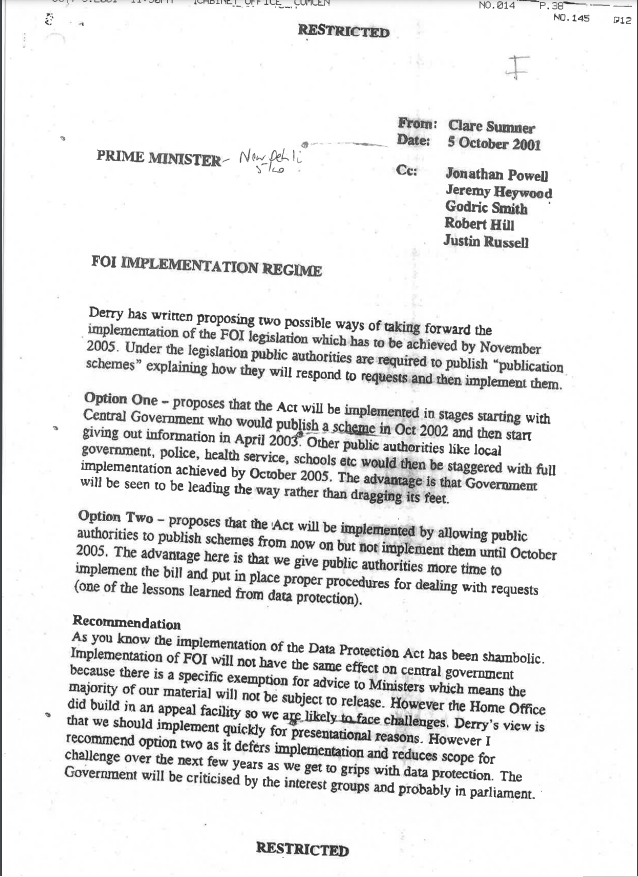
The disclosures, full copies I have linked to at the end of blog, provide some interesting insights on the civil servants’ views on FOIA when it was first being implemented in the early 2000s.
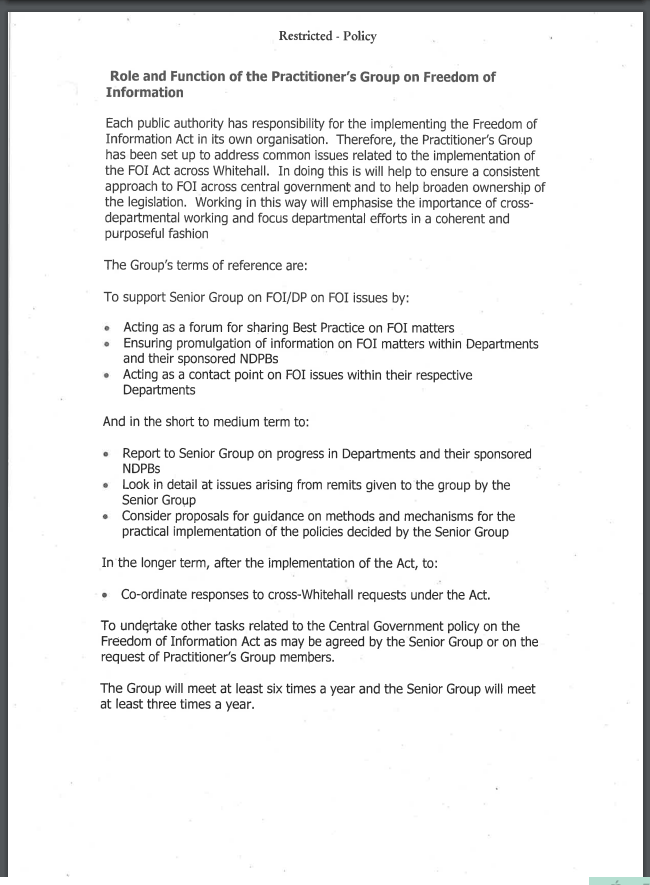
We see in this document an early proposal for a kind of “Clearing House”, the government unit which would later be found by a select committee to have mishandled journalist’s data by coordinating responses to requests across government.
FOI was only actually fully implemented in 2005. The government was debating internally on whether to give public authorities more time to prepare by delaying when they actually did this. They were very aware as these documents show, that this would “receive some criticism from campaigners and the press” about the delay.
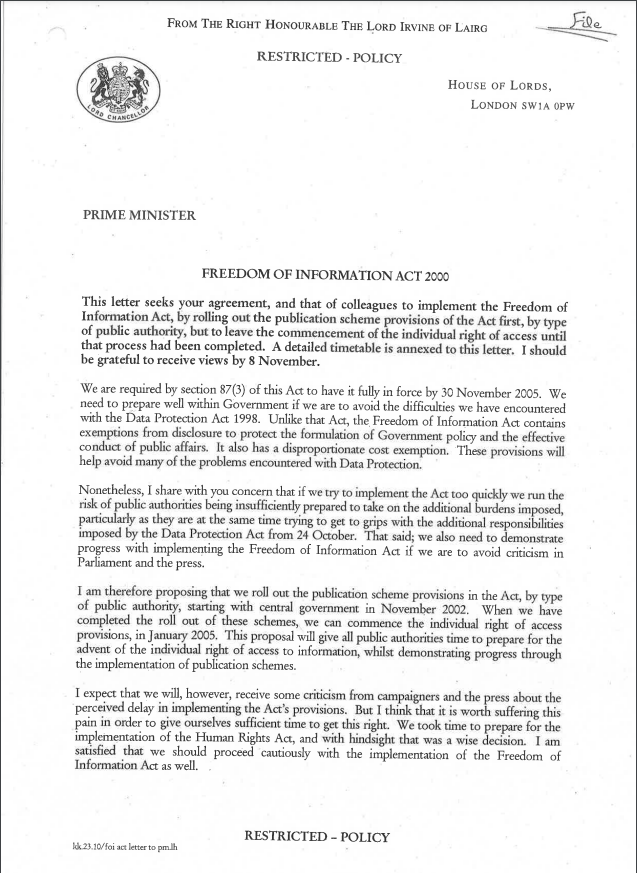
There was also considerable concern that the act would be implemented in the run up to the general election, where “those in the media who will be looking for stories critical of the government will no doubt make use of FOI, either the delay in implementation or its perceived weakness, to attack the government”.
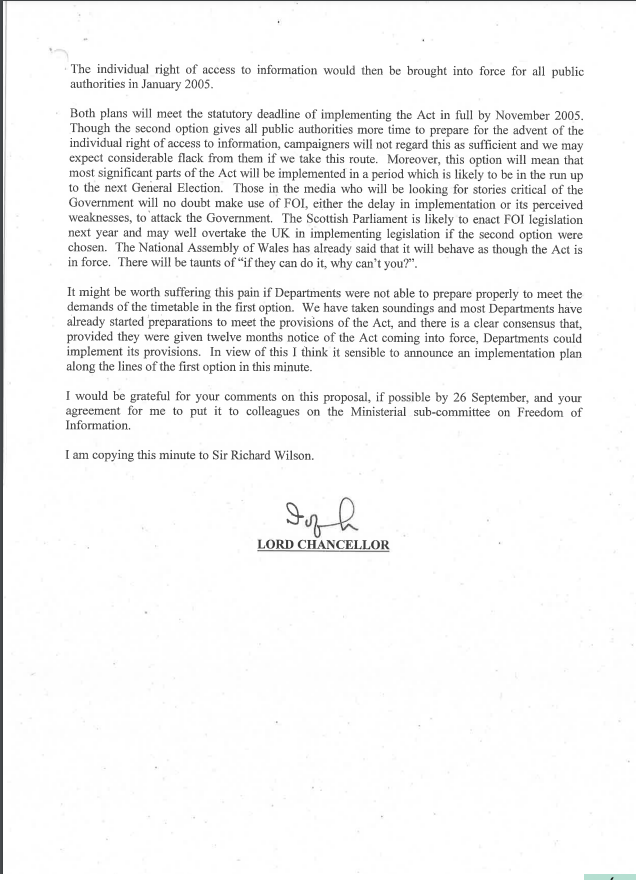
One letter notes that the government had received a written question from the House of Lords about progress with the implementation of the act, and they should set out clearly their intention.
“To prevaricate in my reply to Lord Goodhart would reinforce impressions the government is not serious about implementing its manifesto commitment on Freedom of Information,” The Lord Chancellor advised.
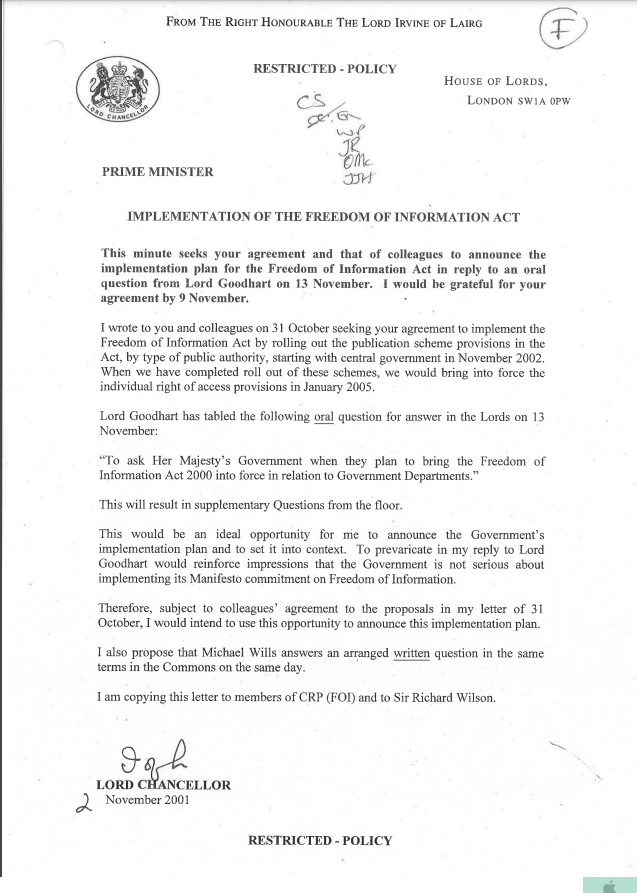
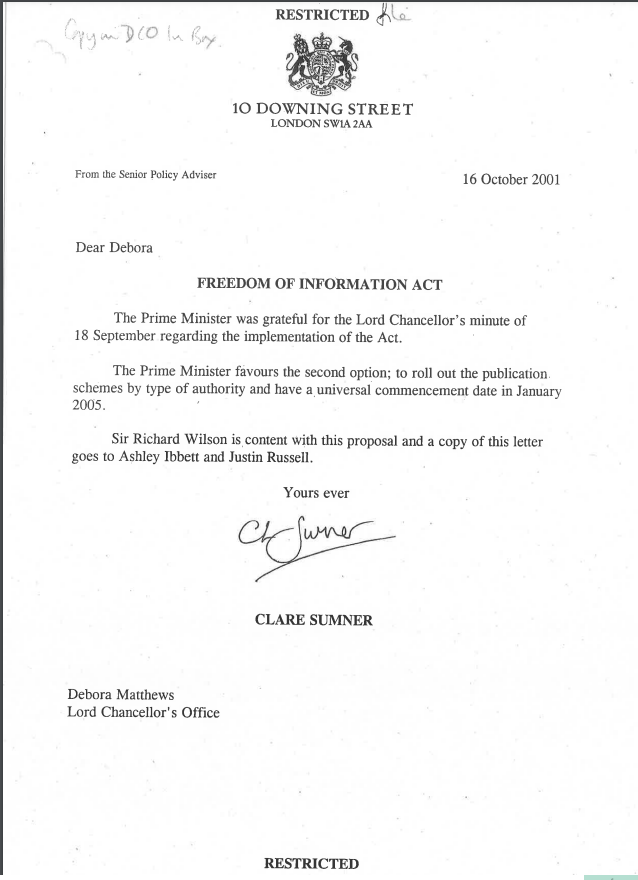
In the end, Blair decided to give departments more time after all.
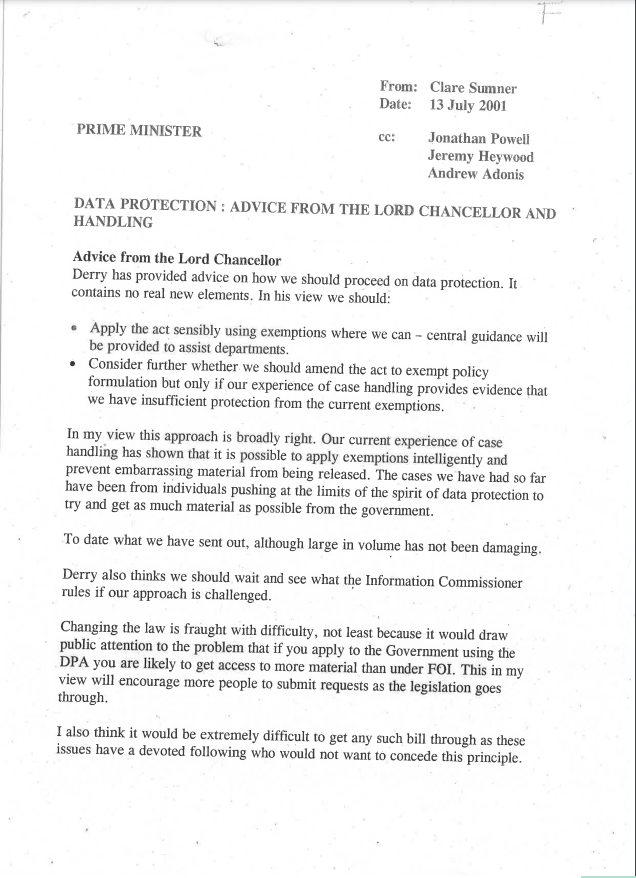
The documents also show some discussion of concerns about how the Data Protection Act was implemented. Civil servants were worried that they didn’t have exemptions related to foreign affairs and policy formation matters to allow this material to be blocked from disclosure. Officials even go as far to suggest amending the law to beef up what can be witheld.
Blair is advised, however, that “our current experience of case handling has shown that it is possible to apply exemptions intelligently and prevent embarrassing material from being released”.
Sir Humphrey would be proud!
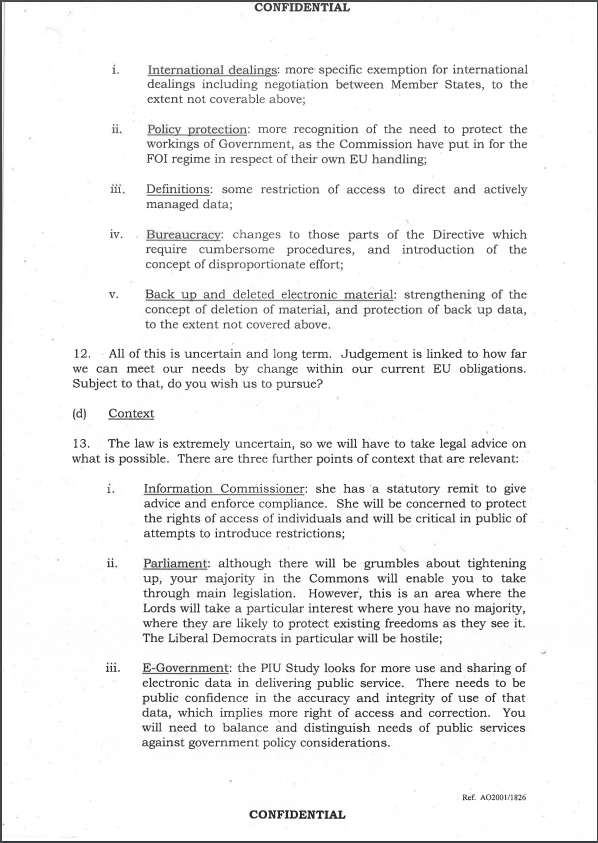
Blair is advised that while “there will be grumbles about tightening up” and he could force it through the House of Commons with his majority, the Lords and the Lib Dems would pose issues. In the end no exemptions were added.
The original documents are below for any FOI nerds interested in the nitty gritty!
You can get Relight my FOIA in your inbox by signing up here 👇

 Relight My FOIA
Leave a comment