Within freedom of information practice, national security has always been a key consideration, and you will really struggle to get information that could in any way risk national security, whatever the public interest.[1]
The Security Services, GCHQ, and even the National Crime Agency, are completely exempt from the UK Freedom of Information Act.[2]
I would go as far as saying this is not the right approach, given the consequences that unqualified opacity around public bodies with such far-ranging powers to constrict individual liberty can have.
I would personally prefer an approach like the US, where national security bodies such as the CIA and FBI are subject to FOI, but with strict national security limitations.
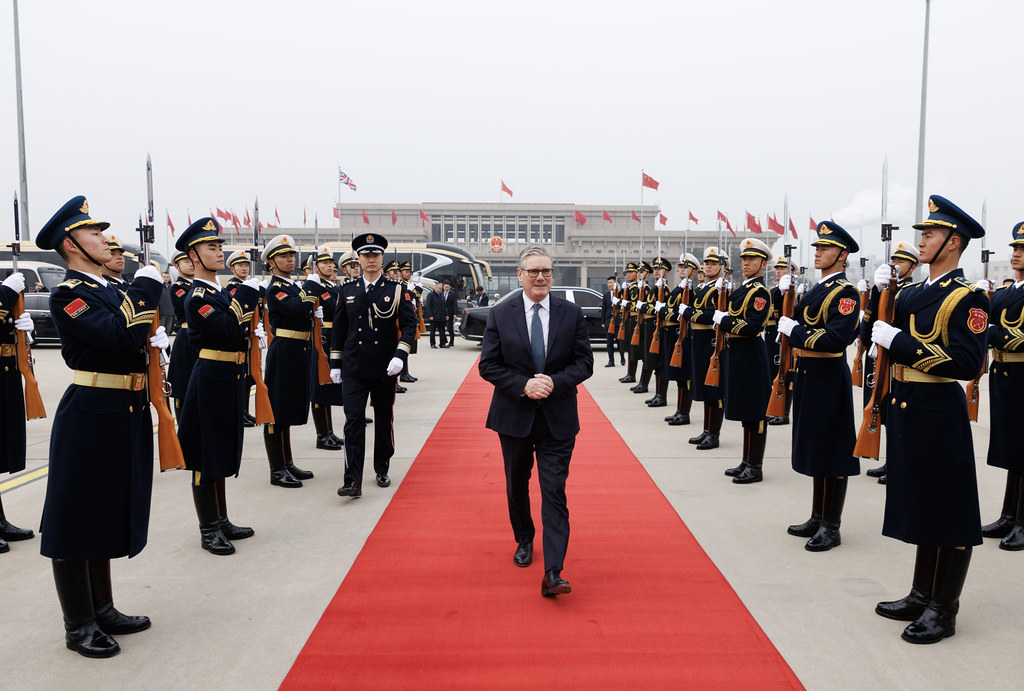
Given the extensive protections already in place around national security information, I was intrigued to read a headline in The Financial Times that “suspicions grow that China is exploiting FOI laws to gather UK security data”.
Anonymous officials briefed the paper that “there’s a growing awareness that FOI is being used by hostile states — and China in particular — specifically in relation to defence matters.”
The crux of the argument, based largely on this anonymous briefing, is that they “believe they have detected a pattern of requests relating to the UK’s defence and national security, raising suspicions that Beijing may be behind a significant proportion of them.”
They are concerned that “narrowly targeted probing on sensitive subjects which elicits individual data points could be pieced together to reveal sensitive information, a concept known as the “mosaic effect” in intelligence circles.”
“The probes could focus on issues such as specific defence programmes, cyber security infrastructure or state defence relations with academia and industry,” an anonymous source suggested to the FT.
What I would argue could have been more strongly challenged in the article, is that this mosaic effect is already a very well established grounds of exemption of information under FOI.
As Maurice Frankel, director of the Campaign for FOI, ably points out in a comment for the piece, “civil servants already refuse requests on ‘jigsaw effect’ grounds now, if they think information could be used in that way — particularly in the areas of defence, national security, international relations and law enforcement. They are very cautious.”
Why now?
So why is this being advanced by officials as an issue?
The significance of the briefing is apparent three paragraphs from the end, where it is revealed that “officials are set to investigate whether further safeguards are needed within the FOI system.”
For me this is the real story. It is hard to see how the intent of this briefing can be anything other than an attempt to roll the pitch for a crackdown on access to information, using the excuse of vaguely characterised threat of China.
When balancing openness with secrecy, which I fully accept is sometimes required, the question is where we draw the line.
Any information government publishes via FOI or otherwise is on a spectrum of use to the nation’s enemies.
This could be said of publications from UK food production (DEFRA statistics) to the number of military age males (ONS population data).
We judge that transparency is of much greater value to us — for example, in avoiding wasting money, some of which can be used to buy tanks, etc. — than it is to a potential enemy.
Even Ukraine, for example, continues to publish military procurement contracts openly, and responds to freedom of information requests about non-operational military matters, even where there is a “potential” of use to Russia.
It understands that in the modern era of cheap satellite imagery and open source intelligence, being obsessive about secrecy in matters of limited actual utility to an enemy is a waste of precious public resources.
This is the clearest possible example of this balance at play, when the costs of getting it wrong are more immediately dire.
In Ukraine’s case, the costs of corruption enabled by opacity and the financial savings from transparency, outweigh any non-specific security issue.
Balancing freedom with security
Turning back to the UK briefing, the officials do not explain why the existing system does not account for the issue of the mosaic effect.
Any change to reduce the scope or add additional exemptions to FOIA should therefore be strongly resisted by civil society.
There are also far more pressing issues in relation to China-related national security, which, ironically, I have used FOI in part to expose.
One example is the the influence and access China has to dual-use technology research projects at British universities.
There is also a fundamental ethical question here.
We are lucky to live in an open society, where freedom of information is a key constitutional right, whatever the issues with enforcing that right.
Should we really be compromising such a right, for vague notions of security benefits, unless officialdom provides specific answers as to why such compromise is vital to protect us?
The risk is that officials are conflating the security of their backsides with that of the nation.
[1] Unless of course, as in the case of the PSNI, the public body accidentally publishes security sensitive information itself.
[2] For the purists, entertainingly, they are however covered by the Environmental Information Regulations, if you want to find out about the energy efficiency of MI6 HQ…
Picture credit: Number 10 Flickr

 Relight My FOIA
Leave a comment