There are growing signs that the government is preparing the ground for an attack on the Freedom of Information Act.
Following reporting in the FT, where officials were kite-flying about the possibility of weakening the act (on spurious cost and national security grounds), parliamentarians have been putting in parliamentary questions trying to get to the bottom of the plans.
These have not turned up any specific plans to make FOI less effective. But the silence and lack of specificity in its support is telling.
When Conservative MP Mike Wood asked:
To ask the Minister for the Cabinet Office, whether he plans to uprate Freedom of Information Act cost thresholds.
Labour Cabinet Office minister Chris Ward wrote back that:
The cost thresholds above which public authorities are not obliged to comply with a Freedom of Information request are set out in secondary legislation. Any changes to FOI legislation will be subject to Parliamentary scrutiny.
When Wood also asked
To ask the Minister for the Cabinet Office, whether the Freedom of Information policy team has given guidance to departments on the use of the mosaic justification.
Ward wrote back
The Cabinet Office has not issued Freedom of Information guidance to government departments on the ‘mosaic effect’.
Mosaic identification had been one of the security issues floated in the FT: that China was using FOI to spy on the government one tidbit at a time.
When Conservative MP Neil O’Brien asked:
To ask the Minister for the Cabinet Office, whether the Government plans to change the law or guidance around Freedom of Information requests.
Ward wrote back
The Government is committed to Freedom of Information (“FOI”) and continues to monitor the performance and implementation of the FOI Act to ensure it is operating as intended by Parliament. Any changes to FOI legislation will be subject to Parliamentary scrutiny.
And when Labour Peer Lord Wills (who formerly served as the minister responsible for FOI) asked
To ask His Majesty’s Government what assessment they have made of the merits of the Freedom of Information Act 2000 in (1) promoting the accountability of government and public authorities, and (2) encouraging public confidence in democratic politics.
Baroness Anderson wrote back saying:
The Government is committed to Freedom of Information and continues to monitor the performance and implementation of the Act to ensure it is operating as intended by Parliament.
When I approached the Cabinet Office press office directly on whether it had, or was reviewing plans to weaken the act, they declined to comment, directing me back to the PQs.
A simple, bland statement to the effect of “the government had no plans to change the operation of or cost thresholds for the act, and that it believes is an important accountability tool” would have put much of the speculation to bed.
That they did not do this suggests to me that weakening the act is still being actively considered somewhere in government, though it is still not clear whether the senior civil service, a particular minister, or another party is leading the charge internally on this.
To try to have a fight now over a key piece of Labour government anti-corruption legislation, in the aftermath of yet more revelations just this week about the appointment of Peter Mandelson to US Ambassador after he had failed vetting, seems brave, to put it mildly.
Now that opposition parties, and Labour’s own parliamentarians, are waking up to the threat, this is not something the government can sneak through secondary legislation on a nod, as is the case with many such regulatory changes.
It would be an ugly fight in the Commons, with the government having little of substance to justify weakening a key accountability mechanism. Labour could of course win a whipped vote, but doing so would further ruin the reputation of the party as committed to propriety, when it had specifically campaigned on cleaning up government.
Sadly, the fact that such a move would be an act of obvious political self-harm won’t necessarily stop it from happening.
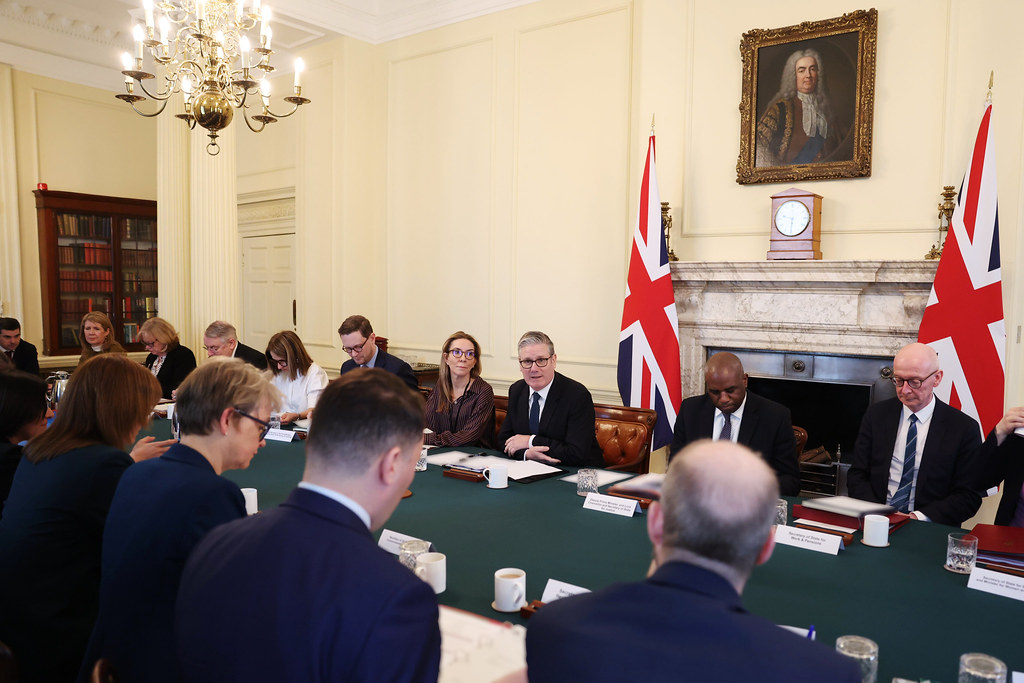
Picture credit: Number 10 Flickr

 Relight My FOIA
Leave a comment