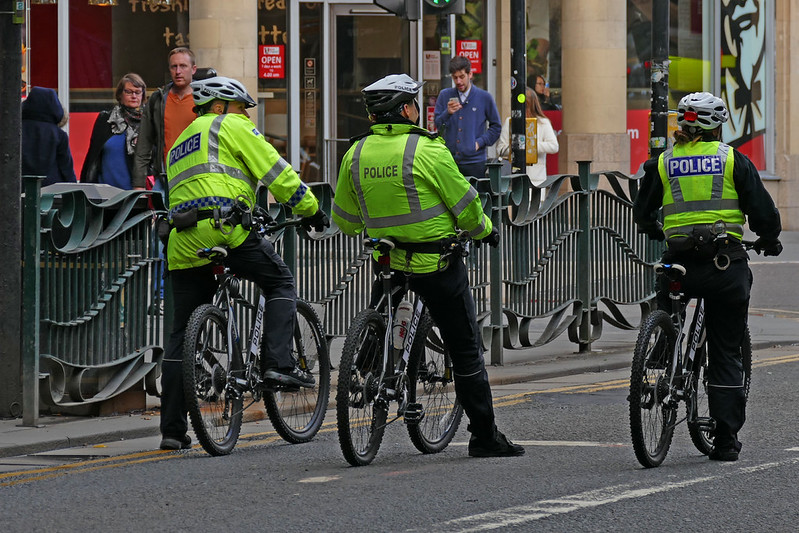
The police hold unique powers to demand answers, to surveil us without our knowledge, to access our homes and most sensitive personal records, and ultimately, to deny us our liberty.
How they use, or indeed misuse, these powers must therefore be carefully scrutinised.
It can come as no surprise that police forces attract a lot of freedom of information requests.
But what has been concerning in recent years is that the police appear to have put more effort into looking into who is asking them for information.
In theory it shouldn’t matter if you are a curious citizen, a campaigner, or a journalist; any FOI request should be judged on its merits, not on who is asking. But increasingly this is a fiction.
Within the police, the names of requestors are being routinely shared by police forces with a unit called the “National Police Freedom of Information and Data Protection Unit” (NPFDU), hosted by the National Police Chiefs’ Council.
As the BBC has reported, this unit then routinely instructs forces on how to handle requests referred to it, often including how to reject them, in the full knowledge of who is asking for the information.
While it said it would stop sharing requestors’ names following the BBC story, it then u-turned and continued doing exactly the same thing.
‘Special attention’
Government insiders always suggest that such efforts are important to help provide a “coordinated” government response, but almost always, such coordination efforts mean less information is disclosed.
They allow public bodies to show a “common face” to requestors, removing inconsistency between police forces that can open up grounds to appeal, in the police’s case going with the lowest common denominator, rather than the least transparent being dragged up by others who are more open.
It also means people known to pose reputational risk to forces are at a high risk their requests will be subject to “special attention”, with bureaucratic obstacles being placed which slow the process down, or forces taking a risk averse approach to disclosure and forcing requestors to challenge refusals through the creaking appeals system.
I’ve been looking into a lot of crypto-related stories recently. As part of this, I sent a request to a list of major police forces earlier this year looking at how often they are having to seek disclosure orders for financial information held by the crypto-currency exchanges that process these transactions.
I received word for word identical refusals from most of these forces. Except for Police Scotland, who gave me everything I asked for.
This is a classic example of what happens when clearing houses are involved in FOI requests. I filed a subject access request to the NPFDU to try and see why such a straightforward request was opposed.
I’ve had bitter experiences with this before with public bodies. The Attorney General’s Office was given a rare rebuke by the ICO for blocking and delaying disclosure of information about Suella Braverman’s cybersecurity blunders on the grounds of my role as a journalist to try and kill a story.
In the NPCC’s case the SAR showed what I suspected, that they had coordinated the blocking of my crypto request.
What I was not expecting was that forces had been referring individual requests I had been making to them to the unit as well.
‘Temporary manual referral’
This included a request I made about suspended Reform MP James McMurdock to Essex Police, with the reason for the referral simply being “MP”.
Another request, in relation to Prince Andrew sent to Norfolk police, was sent to the unit due to a “temporary manual referral”.
A request about how a police force had worked with a now defunct Covid fraud investigations team, Natis, was referred on the grounds of needing “disclosure advice”.
For those lucky enough to have been following the saga of FOI compliance in recent years, this pattern of behaviour is likely to sound remarkably familiar.
It echoes the scandal surrounding the Cabinet Office’s FOI Clearing House.
That unit was ultimately abolished following a review and an investigation by the PACAC committee, largely because it failed to keep requests applicant-blind and banned the sharing of requestors’ personal information (though I’ve struggled to work out how its replacement has been operating…)
Given the persistence of the NPFDU in sharing the personal information of requestors, there is a clear public interest in knowing if this practice has affected the advice issued by the agency to police forces.
They seem determined to keep going with this process, despite the civil liberties issues it poses.
Police forces have clearly decided that they need to build and defend their own version of the discredited Cabinet Office Clearing House under a new name.
Given the extensive powers that police forces have over us, any attempt to reduce the scrutiny they face is something that must strongly be pushed back on, whatever the plaintive bleats of burden from forces.
As anyone living in more authoritarian parts of the world can attest to, police forces without adequate safeguards can lead to some very bad things happening indeed.
Photo credit: Leo Reynolds/Flickr


Leave a comment